Technika - Vászon , Téma / motívum - Portré , Stílus - Szürrealizmus , Alkotás típusa - Olajfestmény
Válasszon keretet
Alkotás leírása
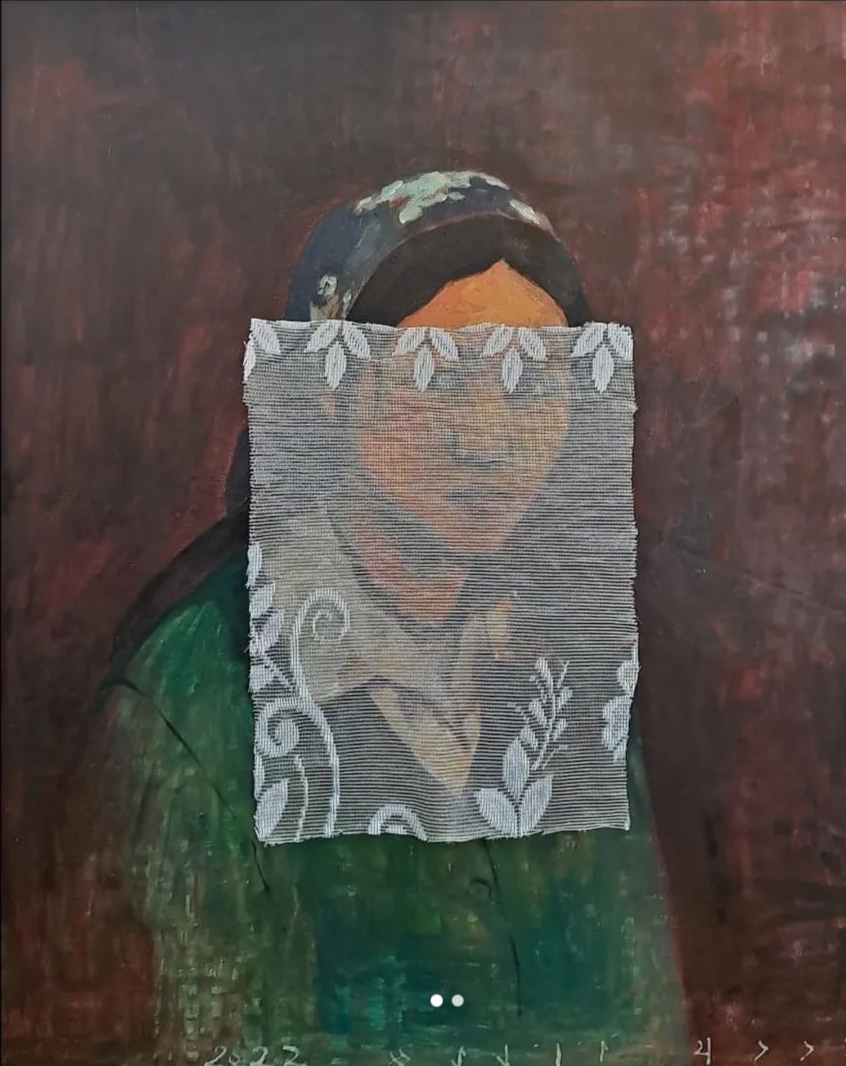
The painting was created half a year after the artist’s mother’s death and is one of the most intimate works in his body of work. It is based not only on the memory of a loved one, but also on the experience of saying goodbye, which became the source of the artwork.
The artist recalls: “When my mother died, we, her children, entered the room to say goodbye to her. An elderly woman was sitting next to her. She instructed us to gently fan Mom with a white cloth over her face, saying that it calms the deceased. Through the sheer fabric, I could clearly see her face—surprisingly calm and radiant.”
In the composition, the woman’s face is concealed by a thin, translucent cloth, which becomes not only a detail of the object but also the main symbol of the work. It separates the world of the living from the world of memories and becomes a metaphor for the fragile boundary between presence and absence. Despite this barrier, the face remains recognizable, as if memory were capable of overcoming both time and loss.
The Kyrgyz title of the painting is “Košok.” In Kyrgyz culture, “košok” is a traditional form of ritual wailing performed primarily by women during funerals and memorial ceremonies. Such lamentations not only express grief but also serve as a way to maintain a connection with the deceased and transform personal pain into collective memory.
The painterly restraint, subdued color palette, and absence of external dramatization lend the work a special emotional depth. Here, grief is expressed not through gesture or facial expression, but through silence, stillness, and the painting’s almost iconographic frontal orientation. The translucent fabric serves simultaneously as a symbol of a final farewell and a sign of a memory that will not fade but continues to live on in the consciousness of loved ones.
“Košok” is not only a tribute to the artist’s mother, but also a reflection on the nature of loss, the dignity of human memory, and the traditions that help people come to terms with the inevitability of death. In this work, a personal experience takes on universal significance and transforms into an image of love that endures even after the passing of a loved one.
A művész további alkotásai
Hasonló alkotások